• Optimization Viewing Comet 220P/McNaught with Vespera Telescopes – Part 1

    During my observations of comet 220P/McNaught on 10-August and 16-August, I noticed a brighter area at the center of the image’s background gradient, where the comet is centered and its tail is partially obscured. The issue is more pronounced with newer telescopes, including the Vespera 3, Vespera Pro, and Vespera Pro 2. It appears on the tablet screen during the observation and in the final JPG output files. Processing the images with Sky Color Studio minimizes but does not eliminate the center gradient. I don’t see the gradient when processing the RAW/TIFF files with PixInsight.
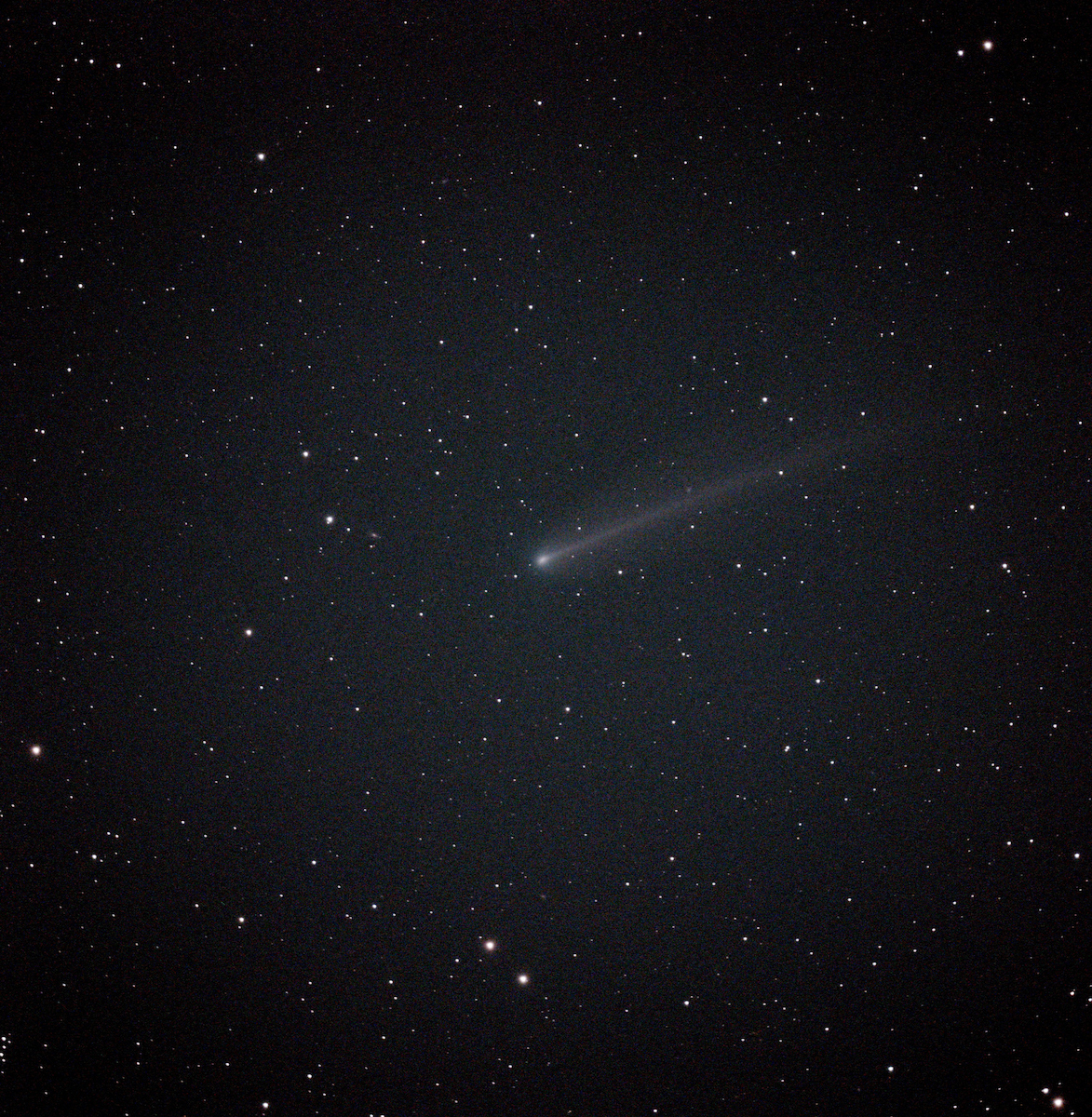
    Comet 220P/McNaught viewed from my backyard with a Vespera Pro 2 Telescope. Frames: 0068; total exposure time: 1340 sec.
    Comet 220P/McNaught viewed from my backyard with a Vespera Pro 2 Telescope. Frames: 0068; Total exposure time: 1340 sec. Manual target settings. Object type: nebula; exposure: 20 sec; gain 15 dB

    To further investigate the issue, I’ve started running multiple observations of the comet each night with different observation parameters. In addition to the target’s RA/Dec position, Singularity’s advanced mode for Manual Targets has several options: Target type (nebula, galaxy, cluster); Individual exposure time (1-30 sec); Gain (0-27 dB). For tonight’s observations I created Manual Targets with target type: nebula; varied the exposure time and varied the gain. The modified manual targets were added to the overnight plans for the different Vespera telescopes.

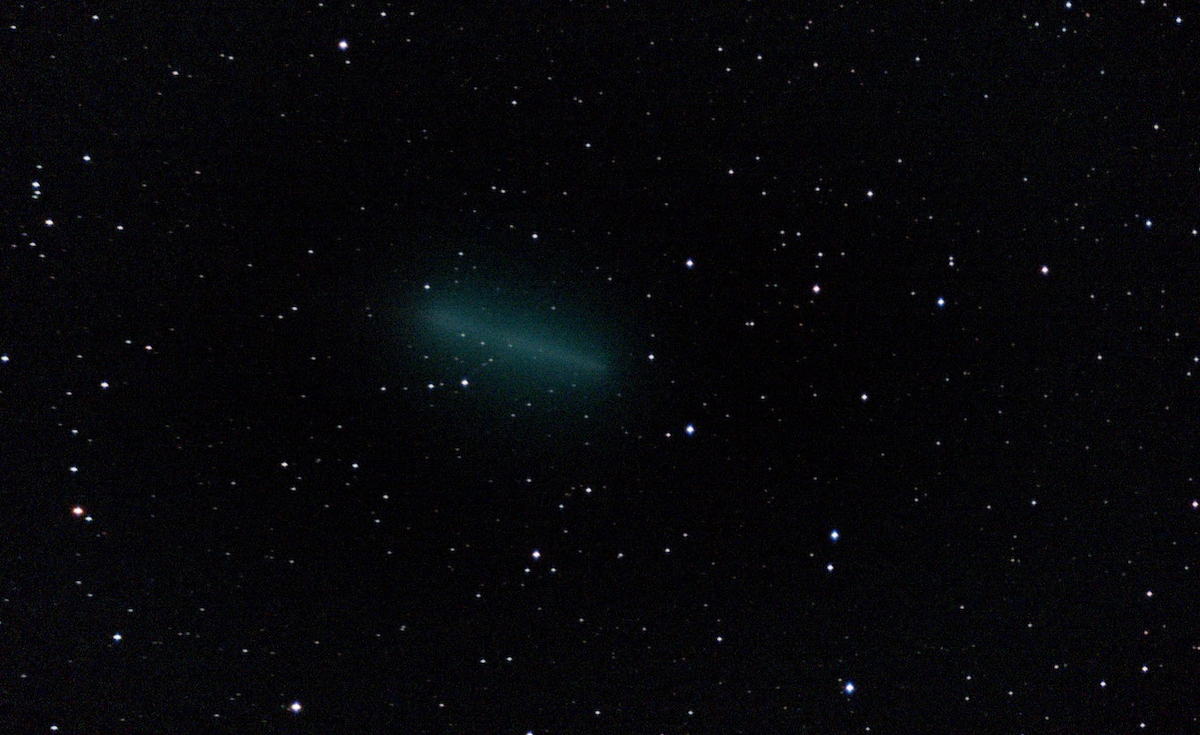
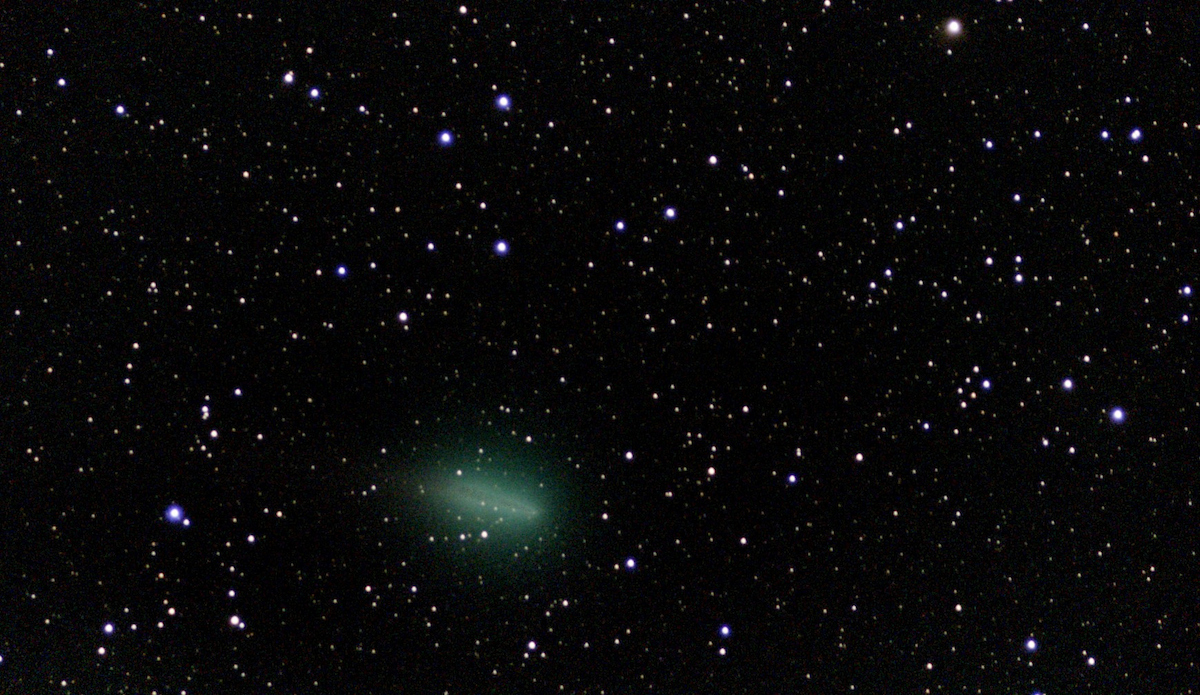
    The results are shown in the unedited, “straight out of the telescope” (SOOT) JPG images below, and are available in my PhotoShelter gallery. Click on the i below the slideshow to see the caption with the Manual Target parameters.

    The center gradient is not present on the Vespera 1 images but is visible with the other telescopes. Frame exposure time and gain didn’t seem to make much difference. There were a few observations where I adjusted the mosaic size, and you can see the background is darker in the center of the image where the comet is located. I’ll investigate mosaic size next time. However, it is not the best option when doing shorter observations when there is not enough time to complete multiple exposures over all sections of the mosaic — and the comet is moving relative to the background star field.
    Vespera 1 Telescope


    Vespera Passengers Telescope


    Vespera 2 Telescope


    Vespera 3 Telescope


    Vespera Pro 1A Telescope


    Vespera Pro 1B Telescope


    Vespera Pro 2 Telescope


    Leave a Reply

    Your email address will not be published. Required fields are marked *

  • Comet 220P/McNaught (19-August-2026)

    The ClearNightSky forecast looked marginal for the night, but it looked like there may be some clear skies when comet C220P/McNaught would be visible. I updated the manual target coordinates (RA/Dec: 03h 01m 24s; +09° 29′ 09″) for the comet in Singularity and started an overnight observation plan. My Vespera Passengers just returned from France after warranty service so was also set up for observing the comet.

    The skies were clear long enough for the telescopes to get some images of the comet. The comet tail appears to be getting a bit longer. According to the Comet Observers Database (COBS) the visual magnitude of the comet was 9.4 for the night.

    The following slideshows include the straight out of the telescope (SOOT) images and images processed with PixInsight or Sky Color Studio. For scale, I’ve included annotated and cropped images (0.5° and 1.0° FOV width). All of the images including the 16-bit RAW/TIFF files are available on my PhotoShelter site (20260819). Click on the i below the slideshow to view the image captions.


    Vespera 1 Telescope


    Vespera 2 Telescope


    Vespera 3 Telescope


    Vespera Pro 1A Telescope


    Vespera Pro 1B Telescope


    Vespera Pro 2 Telescope


    Vespera Passengers Telescope


    Links to my previous observations of comet 220P/McNaught: 20260606, 20260609, 20260616, 20260810, 20260811, 20260815, 20260816


    Leave a Reply

    Your email address will not be published. Required fields are marked *

  • Comet 220P/McNaught (16-August-2026)

    The ClearNightSky forecast looked good for the night. I’ve not had many good observation nights in a row all spring and summer. I set up the Vespera telescopes to observe several targets including comet 220P/McNaught. Since the comet is moving relative to the other stars, every night I need to update comet coordinates (RA/Dec 02h 57m 06s, +09° 31′ 49″) in Singularity as manual targets for each telescope. The manual target settings also included type: nebula; exposure time: 10 sec; and gain: 20 db. I then set up the overnight observation plans in Singularity for each Vespera telescope. After observing the other targets, the first comet observation started at ~02:30. I’ve posted time-lapse videos of the overnight sky (180° and 360°) 20260816.

    All of the telescopes were able to make several observations of the comet. Other than the position in the sky, the comet hadn’t changed much since the previous night (15-August-2026). It still has a bright green head, dust cloud, and tail. According to the Comet Observers Database (COBS) the visual magnitude of the comet was 9.1 for the night.

    The following slideshows include the straight out of the telescope (SOOT) images and images processed with PixInsight or Sky Color Studio. For scale, I’ve included annotated and cropped images (0.5° FOV width). All of the images including the 16-bit RAW/TIFF files are available on my PhotoShelter site (20260816). Click on the i below the slideshow to view the image captions.


    Vespera Classic Telescope


    Vespera II Telescope


    Vespera III Telescope


    Vespera Pro 1A Telescope


    Vespera Pro 1B Telescope


    Vespera Pro 2 Telescope


    The unprocessed (SOOT) jpg images have a significant center of the image background gradient that obscures the tail of the comet. I set the BalENS (Enhanced Imaging Technology) mode for Vespera Pro (1A) to “classic”, Vespera Pro (1B) to “Recommended” and Vespera Pro 2 to “Recommended”. I don’t see much difference in the background center gradient in the unprocessed (SOOT) jpg images. BalENS is only supposed to impact the screen and the saved JPG images created by the telescopes. Processing the images with Sky Color Studio reduced but did not eliminate the center gradient.

    I was able to eliminate the center background gradient issue with PixInsight using the Automatic Background Extraction process. The Gradient Correction process also works. My workflow with PixInsight also includes the Spectrophotometric Photo Callibration for white balance and NoiseXterminator for noise reduction.


    Links to my previous observations of comet 220P/McNaught: 20260606, 20260609, 20260616, 20260810, 20260811, 20260815


    Leave a Reply

    Your email address will not be published. Required fields are marked *

  • Comet 220P/McNaught (15-August-2026)

    After several cloudy and rainy days and nights, the ClearNightSky forecast looked good. I set up my Vespera telescopes to observe comet C220P/McNaught. I updated the comet coordinates (RA/Dec 02h 55m 24s, +09° 32′ 29″) as manual targets. Then set up overnight plans in Singularity for the Vespera telescopes to observe several other targets prior to comet 220P/McNaught. The first comet observation started at 03:00 then repeated every 20-30 minutes. I have posted 180° full sky and 360° Little Planet time-lapse videos of the actual overnight sky conditions for the period of these observations (14/15-August-2026).

    All of the telescopes were able to find and make several observations of the comet. The comet has a longer tail than it did on 10-August. It is brighter than 11-August, but the viewing conditions that night were marginal. According to the Comet Observers Database (COBS) the visual magnitude of the comet was 9.0 for the night.

    The slideshows include the straight out of the telescope (SOOT) images and images processed with PixInsight or Sky Color Studio (included with the Vaonis Singularity application). For scale, I’ve included annotated and cropped images (1.0° FOV width). All of the images including the 16-bit RAW/TIFF files are available on my PhotoShelter site (20260815). Click on the i below the slideshow to view the image captions.


    Vespera 1


    Vespera 2


    Vespera 3


    Vespera Pro 1A


    Vespera Pro 1B


    Vespera Pro 2


    Links to my previous observations of comet 220P/McNaught: 20260606, 20260609, 20260616, 20260810, 20260811


    Leave a Reply

    Your email address will not be published. Required fields are marked *

  • Comet 220P/McNaught (10-August-2026)

    The SpaceWeather site had a note that Comet 220P/McNaught had a 2nd outburst and brightened ca. 600-fold on 05-August. My last observation of the comet was on 16-June when its magnitude was 12.4. The overnight skies here have been cloudy every night since the outburst was announced. ClearDarkSky finally forecasted good viewing conditions. Based on the RA/Dec coordinates (02h 46m 51s; +09° 32′ 31″) from Stellarium, the comet would be visible by 03:00.

    I programed the comet’s position into the Vaonis Singularity application for the Vespera telescopes as a manual target. A little after 03:00 the sky was clear and I had five generations of Vespera telescopes observe comet 220P/McNaught. The comet is brighter and looks different than it did at my last observation (16-June-2026). The unedited SOOT (straight out of the telescope) jpg image, the 16-bit raw/tiff image, and processed images (PixInsight) are available on my PhotoShelter site (20260810).

    According to the Comet Observers Database (COBS) the visual magnitude for this night is +8.2. I missed being able to observe the comet at its maximum magnitude of +6.5. I’ve posted time-lapse videos (180° and 360°) for the viewing conditions of the overnight sky (20260809/10).

    The following slideshows include the straight out of the telescope (SOOT) images and images processed with PixInsight. For scale, I’ve included annotated and cropped images (0.5° FOV width). All of the images including the 16-bit RAW/TIFF files are available on my PhotoShelter site (20260810). Click on the i below the slideshow to view the image captions.


    Vespera 1


    Vespera 2


    Vespera 3


    Vespera Pro 1


    Vespera Pro 2


    In the unprocessed jpg images the center of the image has a brighter background. It is more noticeable in the Vespera 3 and Vespera Pro 2 images. Processing the images with PixInsight — Gradient Correction flattened the background; Spectrophotometric Color Correction provided white balance; and NoiseXterminator removed the noise).


    Links to my previous observations of comet 220P/McNaught: 20260606, 20260609, 20260616


    Leave a Reply

    Your email address will not be published. Required fields are marked *

  • Comet C2025/R2 Swan (27-October-2025)

    Stellina Telescope

    Comet C2025/R2 Swan. Stellina Telescope (400 mm, f/5). Manual target (exp 10 sec, gain 20, RA/Dec: 21h07m10.94s/-4°58'35.6"). Composite of 155 images (1550 sec, 25m 10s)
    Comet C2025/R2 Swan. Stellina Telescope (400 mm, f/5). Manual target (exp 10 sec, gain 20, RA/Dec: 21h07m10.94s/-4°58’35.6″). Composite of 155 images (25m 10s).

    Vespera Classic Telescope

    Comet C2025/R2 Swan. Vespera Classic Telescope (200 mm, f/4). Manual target (exp 10 sec, gain 20, RA/Dec: 21h07m10.94s/-4°58'35.6"). Composite of 255 images (42m 10s).
    Comet C2025/R2 Swan. Vespera Classic Telescope (200 mm, f/4). Manual target (exp 10 sec, gain 20, RA/Dec: 21h07m10.94s/-4°58’35.6″). Composite of 255 images (42m 10s).

    Leave a Reply

    Your email address will not be published. Required fields are marked *

  • Comet C2025/A6 Lemmon (04-October-2025)

    I received a text notification from the folks at Vaonis that Comet C2025/A6 Lemmon would be visible in the early morning sky. I looked up the RA/Dec coordinates for the comet using Stellarium and programed them into targets for my Stellina, Vespera Classic, Vespera II, and Vespera Pro telescopes. The RA/Dec coordinates for 04:00 were 10h02m45s +41°05’14” which would be about 23° above the horizon to the northeast (near the big dipper). At 04:00 the comet was either blocked or just above the tree line. By 04:30 the comet could be observed by the telescopes.


    Vespera Classic

    The images are composites of 32 10-second images which is just over a 5-minute exposure. This exposure is long enough to see the comet tail. Longer exposures show movement of the comet head relative to the stars. The estimated magnitude of the comet is 13.1 (not yet visible to the unaided eye). The green color of the comet is due to diatomic carbon in the coma absorbing ultraviolet light and re-emitting it as green fluorescence. Note in three of the images a faint satellite trail is visible.


    Vespera II


    Leave a Reply

    Your email address will not be published. Required fields are marked *

October 2026
S M T W T F S
 123
45678910
11121314151617
18192021222324
25262728293031

Search the website


David Mathre Avatar

About the author


Tag Cloud

Comet Comet 220P/McNaught Comet C2025/A6 Comet C2025/R2 Jupiter Moon occultation Optimization PixInsight Singularity Stellarium Stellina Telescope time-lapse Topaz Photo Vaonis Vespera Vespera Classic Vespera II Vespera III Vespera Passengers Vespera Pro Vespera Pro 2


Popular Categories