• Lunar Occultation of Jupiter (06-October-2026)

    Weather permitting, a rare lunar occultation of Jupiter was going to be visible at my location early the morning of 06-October. I previously recorded a lunar occultation of Mars (13-January-2025) with my Vespera telescopes. For that occultation the moon was full. This time the moon was a waning crescent. Jupiter would disappear behind the bright side of the moon’s crescent and reappear an hour later on the dark (illuminated by earthshine) side of the moon.

    There is a significant difference between the luminosity of the moon and Jupiter. This requires choices and compromises when setting up the observation parameters for recording the occultation. For the previous Mars occultation, I set up one telescope with the Vespera parameters optimized for lunar observations. The moon looked OK, but Mars was just a tiny dot. I set up a second telescope with the Vespera parameters optimized for the other planets. Mars appeared as a small orange disk, but the moon was over exposed. I was not able to see the two moons of Mars on that occasion.

    For this occultation of Jupiter, I also wanted to see if I could observe and record time that the four brightest moons of Jupiter (Callisto, Ganymede, Europa, and Io) disappear and reappear. I previously figured out a way to configure a Vespera telescope to observe Jupiter’s moons (18-February-2025) as a modified manual target.

    The evening sky was clear. I set up overnight plans for the Vespera telescopes. Some programed for lunar observations, and some programed to view Jupiter and the moons as modified manual targets. The telescopes needed to be in expert mode to set the manual target exposure time and gain. Object type: stars; Pointing type: indirect: Exposure time: 1 sec; and Gain: 0 dB. The right ascension (09h 31m 04s) and declination (+15°, 20′, 31″) for Jupiter at the time of the occultation for my location came from the Stellarium windows application.

    I started the overnight observation plans and went to bed. The occultation wouldn’t begin until after 04:15. Unfortunately, when I went out to check the telescopes, I realized that the moon was still below the tree line. Since I set the telescope observing Jupiter to use the “indirect” pointing mode it did initialize and still was able to point at Jupiter and be in focus. Most of the image was obscured by the tree leaves, and as expected the bright part of the moon’s crescent was overblown.
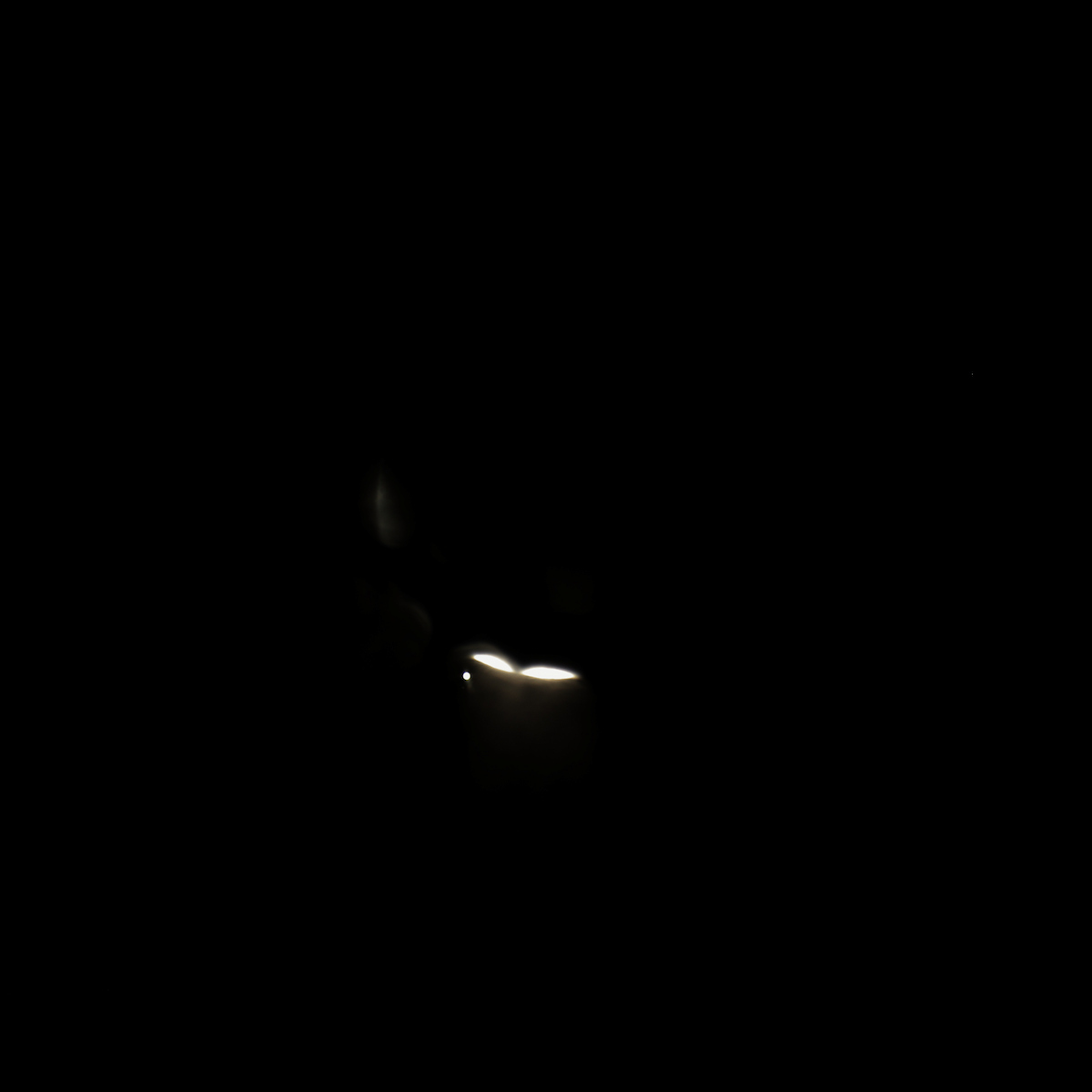
    Jupiter occultation viewed from my backyard with a Vespera Pro 1 Telescope. Exposure time:  sec.
    Jupiter occultation viewed from my backyard with a Vespera Pro 1 Telescope. Mostly hidden by tree leaves. The tiny white disk is Jupiter. The bright area is the Moon’s crescent mostly blocked by tree leaves.

    Even though observation of the start of the occultation failed, I still had a chance to view the end of the occultation. Jupiter and its moons wouldn’t reappear from behind the moon for nearly an hour. Rather than gamble that the moon would rise enough above the tree line, I moved the tripods and telescopes. The Vespera telescopes are light enough (~ 5 kg/11 lbs) to do this. After leveling the tripods, I reinitialized the telescopes and restarted the observation plan.

    From this location the telescopes successfully recorded Jupiter and its four largest moons reappearing. Europa (05:21:11), Callisto (05:23:19), Io (05:24:13), Jupiter (start 05:26:07, end 05:27:13), and finally Ganymede (05:28:39). The times are local (- 4 hours from UTC) as recorded by the telescope.

    I created two time-lapse videos of the event. The first time-lapse video from images recorded by a Vespera 3 telescope. The bright part of the moon’s crescent is slightly over exposed, and the dark part of the moon is not visible. Jupiter is definitely a disk, but with the Vespera telescopes too small to see any detail. In this video, Jupiter’s moons are not visible.


    Jupiter reappearing from behind the Moon. Images recorded with a Vespera 3 telescope.

    The second time-lapse video is from images recorded by a Vespera Pro 2 telescope. The images were processed with Capture One. I cropped out the bright part of the moon’s crescent. The dark side of the moon is barely visible. Jupiter is over exposed. For the manual target settings (type: stars) the shortest exposure time is 1 second, and the lowest gain is 0 dB. Also, the telescope only saves 8-bit jpg images in this mode. I would have been able to pull out more detail while processing the images if there was an option to collect and save 16-bit TIFF files during the observation.

    Europa, Callisto, Io, Jupiter, and Ganymede returning from behind the Moon. Images recorded with a Vespera Pro 2 telescope. Images processed with Capture One, and time-lapse video created with Photoshop. Note that the jpg images needed to be converted from gray scale to rgb to be processed by Capture One.

    The next image (post occultation event) was also taken by the Vespera Pro 2 telescope but in lunar observation mode. This mode uses a much faster exposure time (0.0038 sec). Details on the sunlit portion of the moon’s crescent are visible and properly exposed with the remainder of the moon being black. Jupiter is the small white disk above the moon. Jupiter’s moons are not visible in this image.
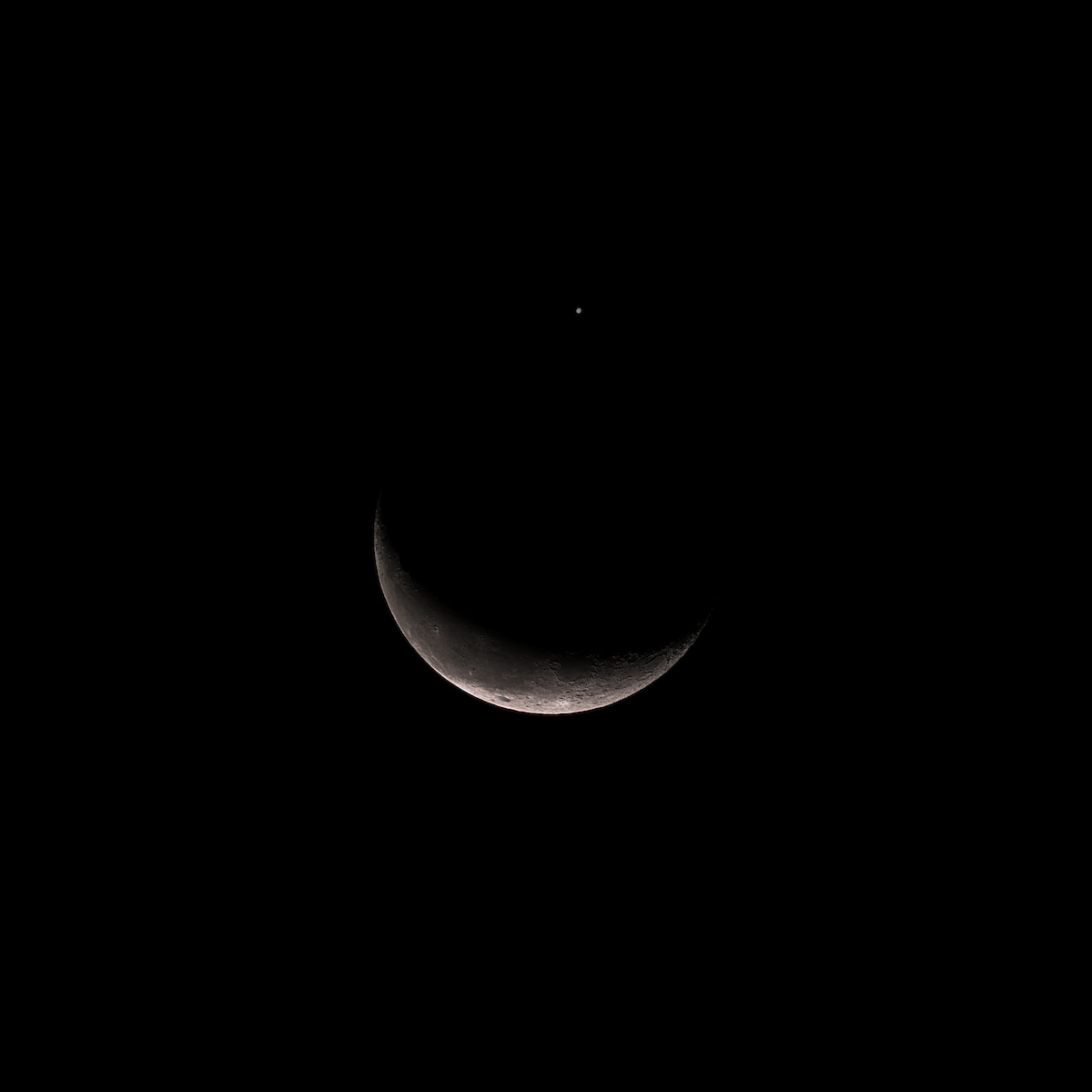
    Jupiter occultation viewed from my backyard with a Vespera Pro 2 Telescope. Exposure time: 0.038 sec.
    Jupiter occultation viewed from my backyard with a Vespera Pro 2 Telescope. Exposure time: 0.038 sec. Full scale image from the telescope (3536 x 3536 pixels).

    As an experiment, I used Topaz Photo to smooth and scale-up the image of Jupiter. I started with a 128 x 128 pixel crop of Jupiter from the above image and let Topaz scale it 4x. Are the bands real, or AI artifacts?
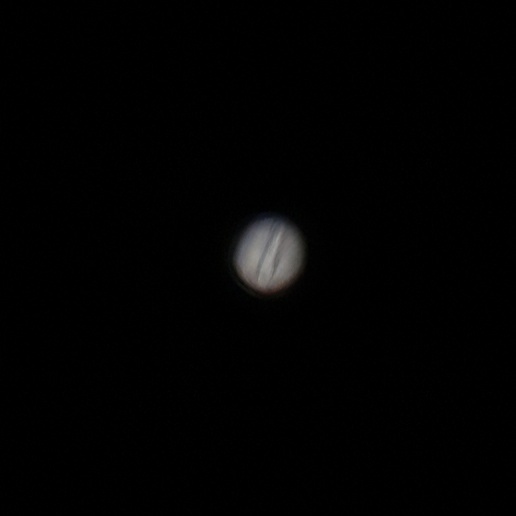
    Jupiter occultation viewed from my backyard with a Vespera Pro 2 Telescope. Exposure time:  sec.
    Jupiter after the image cropped and upscaled (high fidelity 2) with Topaz Photo. Image size (516 x 516 pixels). Are the bands real, or AI artifacts?

    Leave a Reply

    Your email address will not be published. Required fields are marked *

  • Comet 220P/McNaught (29-August-2026)

    After a couple of cloudy nights the ClearNightSky forecast looked good for continuing the observation of comet C220P/McNaught. However, the Waning Gibbous moon is bright (~98% illuminated) making the observation more challenging. I updated the manual target coordinates (RA/Dec: 03h 15m 18s; +09° 05′ 24″) for the comet in Singularity and started an overnight observation plan.

    The comet is fainter, and the tail is more than 0.5° long. According to the Comet Observers Database (COBS) the visual magnitude of the comet continues to dim and was 10.3 for the night.

    The following slideshows include the straight out of the telescope (SOOT) images and images processed with PixInsight. For scale, I’ve included annotated and cropped images (1.0° FOV width). All of the images including the 16-bit RAW/TIFF files are available on my PhotoShelter site (20260826). Click on the i below the slideshow to view the captions with information about each image.


    Vespera 1 Telescope


    Vespera Passengers Telescope


    Vespera 2 Telescope


    Vespera 3 Telescope


    Vespera Pro 1A Telescope


    Vespera Pro 1B Telescope


    Vespera Pro 2 Telescope


    Links to my previous observations of comet 220P/McNaught: 20260606, 20260609, 20260616, 20260810, 20260811, 20260815, 20260816, 20260819, 20260820, 20260824, 20260825, 20260826,


    Leave a Reply

    Your email address will not be published. Required fields are marked *

  • Comet 220P/McNaught (26-August-2026)

    The continuing observations of comet C220P/McNaught with my Vespera telescopes. Third night in a row that the night sky remained clear which has been unusual this spring and summer. I updated the manual target coordinates (RA/Dec: 03h 11m 33s; +09° 14′ 28″) for the comet in Singularity and started overnight observation plans for the Vespera telescopes.

    The head of the comet is green, and the tail remains nearly 1° long. According to the Comet Observers Database (COBS) the visual magnitude of the comet continues to dim and was 10.1 for the night.

    The following slideshows include the straight out of the telescope (SOOT) images and images processed with PixInsight. For scale, I’ve included annotated and cropped images (1.0° FOV width). All of the images including the 16-bit RAW/TIFF files are available on my PhotoShelter site (20260826). Click on the i below the slideshow to view the captions with information about each image.


    Vespera 1 Telescope


    Vespera Passengers Telescope


    Vespera 2 Telescope


    Vespera 3 Telescope


    Vespera Pro 1A Telescope


    Vespera Pro 1B Telescope


    Vespera Pro 2 Telescope


    Links to my previous observations of comet 220P/McNaught: 20260606, 20260609, 20260616, 20260810, 20260811, 20260815, 20260816, 20260819, 20260820, 20260824, 20260825


    Leave a Reply

    Your email address will not be published. Required fields are marked *

  • Comet 220P/McNaught (25-August-2026)

    The continuing observations of comet C220P/McNaught with my Vespera telescopes. I updated the manual target coordinates (RA/Dec: 03h 10m 15s; +09° 17′ 05″) for the comet in Singularity and started overnight observation plans for the Vespera telescopes.

    The head of the comet is green, and the tail is nearly 1° long. According to the Comet Observers Database (COBS) the visual magnitude of the comet was 10.0 for the night.

    The following slideshows include the straight out of the telescope (SOOT) images and images processed with PixInsight or Sky Color Studio. For scale, I’ve included annotated and cropped images (1.0° FOV width). All of the images including the 16-bit RAW/TIFF files are available on my PhotoShelter site (20260825). Click on the i below the slideshow to view the image captions.


    Vespera 1 Telescope


    Vespera Passengers Telescope


    Vespera 2 Telescope


    Vespera 3 Telescope


    Vespera Pro 1A Telescope


    Vespera Pro 1B Telescope


    Vespera Pro 2 Telescope


    Links to my previous observations of comet 220P/McNaught: 20260606, 20260609, 20260616, 20260810, 20260811, 20260815, 20260816, 20260819, 20260820, 20260824


    Leave a Reply

    Your email address will not be published. Required fields are marked *

  • Comet 220P/McNaught (24-August-2026)

    The continuing observations of comet C220P/McNaught with my Vespera telescopes. After several cloudy days and nights, the ClearNightSky forecast looked good for two or three nights. I updated the manual target coordinates (RA/Dec: 03h 09m 01s; +09° 19′ 20″) for the comet in Singularity and started overnight observation plans for the Vespera telescopes.

    The head of the comet is green, and the tail is nearly 1° long. According to the Comet Observers Database (COBS) the visual magnitude of the comet was 9.9 for the night.

    The following slideshows include the straight out of the telescope (SOOT) images and images processed with PixInsight . For scale, I’ve included annotated and cropped images (0.5° and 1.0° FOV width). All of the images including the 16-bit RAW/TIFF files are available on my PhotoShelter site (20260824). Click on the i below the slideshow to view the image captions.


    Vespera 1 Telescope


    Vespera Passengers Telescope


    Vespera 2 Telescope


    Vespera 3 Telescope


    Vespera Pro 1A Telescope


    Vespera Pro 1B Telescope


    Vespera Pro 2 Telescope


    Links to my previous observations of comet 220P/McNaught: 20260606, 20260609, 20260616, 20260810, 20260811, 20260815, 20260816, 20260819, 20260820


    Leave a Reply

    Your email address will not be published. Required fields are marked *

  • Comet 220P/McNaught (20-August-2026)

    My observations of comet C220P/McNaught continue. The forecast from ClearNightSky looked promising. I set up the Vespera telescopes with an overnight plan that included different manual target observation settings. The new coordinates for the comet (RA/Dec: 03h 02m 55s; +09° 27′ 45″) were updated in Singularity.

    The skies remained clear much of the night permitting the telescopes to collect better images of the comet than the previous night (19-August). The comet tail is long and you can detect some curvature. According to the Comet Observers Database (COBS) the visual magnitude of the comet was +9.5 for the night.

    The following slideshows include the straight out of the telescope (SOOT) images and images processed with PixInsight or Sky Color Studio. For scale, I’ve included annotated and cropped images (0.5° and 1.0° FOV width). All of the images including the 16-bit RAW/TIFF files are available on my PhotoShelter site (20260820). Click on the i below the slideshow to view the image captions.


    Vespera 1 Telescope


    Vespera Passengers Telescope


    Vespera 2 Telescope


    Vespera 3 Telescope


    Vespera Pro 1A Telescope


    Vespera Pro 1B Telescope


    Vespera Pro 2 Telescope


    Links to my previous observations of comet 220P/McNaught: 20260606, 20260609, 20260616, 20260810, 20260811, 20260815, 20260816, 20260819


    Leave a Reply

    Your email address will not be published. Required fields are marked *

  • Comet 220P/McNaught (19-August-2026)

    The ClearNightSky forecast looked marginal for the night, but it looked like there may be some clear skies when comet C220P/McNaught would be visible. I updated the manual target coordinates (RA/Dec: 03h 01m 24s; +09° 29′ 09″) for the comet in Singularity and started an overnight observation plan. My Vespera Passengers just returned from France after warranty service so was also set up for observing the comet.

    The skies were clear long enough for the telescopes to get some images of the comet. The comet tail appears to be getting a bit longer. According to the Comet Observers Database (COBS) the visual magnitude of the comet was 9.4 for the night.

    The following slideshows include the straight out of the telescope (SOOT) images and images processed with PixInsight or Sky Color Studio. For scale, I’ve included annotated and cropped images (0.5° and 1.0° FOV width). All of the images including the 16-bit RAW/TIFF files are available on my PhotoShelter site (20260819). Click on the i below the slideshow to view the image captions.


    Vespera 1 Telescope


    Vespera 2 Telescope


    Vespera 3 Telescope


    Vespera Pro 1A Telescope


    Vespera Pro 1B Telescope


    Vespera Pro 2 Telescope


    Vespera Passengers Telescope


    Links to my previous observations of comet 220P/McNaught: 20260606, 20260609, 20260616, 20260810, 20260811, 20260815, 20260816


    Leave a Reply

    Your email address will not be published. Required fields are marked *

  • Comet 220P/McNaught (16-August-2026)

    The ClearNightSky forecast looked good for the night. I’ve not had many good observation nights in a row all spring and summer. I set up the Vespera telescopes to observe several targets including comet 220P/McNaught. Since the comet is moving relative to the other stars, every night I need to update comet coordinates (RA/Dec 02h 57m 06s, +09° 31′ 49″) in Singularity as manual targets for each telescope. The manual target settings also included type: nebula; exposure time: 10 sec; and gain: 20 db. I then set up the overnight observation plans in Singularity for each Vespera telescope. After observing the other targets, the first comet observation started at ~02:30. I’ve posted time-lapse videos of the overnight sky (180° and 360°) 20260816.

    All of the telescopes were able to make several observations of the comet. Other than the position in the sky, the comet hadn’t changed much since the previous night (15-August-2026). It still has a bright green head, dust cloud, and tail. According to the Comet Observers Database (COBS) the visual magnitude of the comet was 9.1 for the night.

    The following slideshows include the straight out of the telescope (SOOT) images and images processed with PixInsight or Sky Color Studio. For scale, I’ve included annotated and cropped images (0.5° FOV width). All of the images including the 16-bit RAW/TIFF files are available on my PhotoShelter site (20260816). Click on the i below the slideshow to view the image captions.


    Vespera Classic Telescope


    Vespera II Telescope


    Vespera III Telescope


    Vespera Pro 1A Telescope


    Vespera Pro 1B Telescope


    Vespera Pro 2 Telescope


    The unprocessed (SOOT) jpg images have a significant center of the image background gradient that obscures the tail of the comet. I set the BalENS (Enhanced Imaging Technology) mode for Vespera Pro (1A) to “classic”, Vespera Pro (1B) to “Recommended” and Vespera Pro 2 to “Recommended”. I don’t see much difference in the background center gradient in the unprocessed (SOOT) jpg images. BalENS is only supposed to impact the screen and the saved JPG images created by the telescopes. Processing the images with Sky Color Studio reduced but did not eliminate the center gradient.

    I was able to eliminate the center background gradient issue with PixInsight using the Automatic Background Extraction process. The Gradient Correction process also works. My workflow with PixInsight also includes the Spectrophotometric Photo Callibration for white balance and NoiseXterminator for noise reduction.


    Links to my previous observations of comet 220P/McNaught: 20260606, 20260609, 20260616, 20260810, 20260811, 20260815


    Leave a Reply

    Your email address will not be published. Required fields are marked *

  • Comet 220P/McNaught (15-August-2026)

    After several cloudy and rainy days and nights, the ClearNightSky forecast looked good. I set up my Vespera telescopes to observe comet C220P/McNaught. I updated the comet coordinates (RA/Dec 02h 55m 24s, +09° 32′ 29″) as manual targets. Then set up overnight plans in Singularity for the Vespera telescopes to observe several other targets prior to comet 220P/McNaught. The first comet observation started at 03:00 then repeated every 20-30 minutes. I have posted 180° full sky and 360° Little Planet time-lapse videos of the actual overnight sky conditions for the period of these observations (14/15-August-2026).

    All of the telescopes were able to find and make several observations of the comet. The comet has a longer tail than it did on 10-August. It is brighter than 11-August, but the viewing conditions that night were marginal. According to the Comet Observers Database (COBS) the visual magnitude of the comet was 9.0 for the night.

    The slideshows include the straight out of the telescope (SOOT) images and images processed with PixInsight or Sky Color Studio (included with the Vaonis Singularity application). For scale, I’ve included annotated and cropped images (1.0° FOV width). All of the images including the 16-bit RAW/TIFF files are available on my PhotoShelter site (20260815). Click on the i below the slideshow to view the image captions.


    Vespera 1


    Vespera 2


    Vespera 3


    Vespera Pro 1A


    Vespera Pro 1B


    Vespera Pro 2


    Links to my previous observations of comet 220P/McNaught: 20260606, 20260609, 20260616, 20260810, 20260811


    Leave a Reply

    Your email address will not be published. Required fields are marked *

  • Comet 220P/McNaught (11-August-2026)

    The ClearNightSky forecast didn’t look very good, but I decided to try and view comet C220P/McNaught again. I programed the comet’s new RA/Dec coordinates (02h48m40s, +09°32’56”) as a manual target. Then set up overnight plans in Singularity for the Vespera telescopes to observe the comet. The first attempt started at 03:30 then repeated every 20-30 minutes.

    According to the Comet Observers Database (COBS) the visual magnitude of the comet was 8.4 for the night. My images from the previous night (20260810) were better because the seeing conditions were much better. The forecast for the next few nights doesn’t look good for more observations.

    The following slideshows include the straight out of the telescope (SOOT) images and images processed with PixInsight or Sky Color Studio (included with the Vaonis Singularity application). For scale, I’ve included annotated and cropped images (0.5° FOV width). All of the images including the 16-bit RAW/TIFF files are available on my PhotoShelter site (20260811). Click on the i below the slideshow to view the image captions.


    Vespera 3


    Vespera Pro


    Vespera Pro 2


    Before an observation session starts, the Vespera telescope initializes. It aligns itself to the sky and focuses the stars on the digital sensor. Once the observation session starts, the telescope continues to recheck that it is pointing at the target, and the stars remain in focus. The telescope records every good observation and adds them to the image stack. Faulty images containing clouds, stray light, and jet trails are automatically filtered by the telescope and not added to the image stack. The telescope stops an observation session after several minutes of repeated problematic images. If time remains in the overnight sequence, the telescope will attempt to restart the observation.

    The Vespera telescopes did initialize and managed to get a few observations of Comet 220P/McNaught during a few breaks in the clouds. If the telescopes were not automated, I probably would have given it up for the night. The successful observations were only 8-10 minutes of frames collected, so the comet is not very bright and there still is significant background noise in the images. The Vespera 3 got the best image for the night. The straight out of the telescope (SOOT) JPG images from the Vespera Pro and Vespera Pro 2 have bright gradient backgrounds in the center of the image. Processing the 16-bit RAW/TIFF images with PixInsight (Gradient Correction) removes the bright center background. The workflow I use with PixInsight also includes Spectrophotometric Photometric Calibration (corrects white balance), and NoiseXterminator (noise reduction).

    For comparison, I also processed the Vespera 3 observation of comet 220P/McNaught with the Sky Color Studio (SCS) application included in the current version of Singularity. Sky Color Studio processes the 16-bit RAW image within the Singularity application. I am running the program on a Samsung Android tablet (it does not run on Windows). The SCS application provides an 8-bit JPG image output that can be saved locally or uploaded. I saved one version of the image with no adjustments. The comet is brighter than the JPG SOOT image with the bright center background gradient more noticeable. I also processed the image with denoise (100%) and adjusted the contrast (+20%). That reduces the background gradient but also dims the comet. 


    Links to my previous observations of comet 220P/McNaught: 20260606, 20260609, 20260616, 20260810


    Leave a Reply

    Your email address will not be published. Required fields are marked *

October 2026
S M T W T F S
 123
45678910
11121314151617
18192021222324
25262728293031

Search the website


David Mathre Avatar

About the author


Tag Cloud

Comet Comet 220P/McNaught Comet C2025/A6 Comet C2025/R2 Jupiter Moon occultation Optimization PixInsight Singularity Stellarium Stellina Telescope time-lapse Topaz Photo Vaonis Vespera Vespera Classic Vespera II Vespera III Vespera Passengers Vespera Pro Vespera Pro 2


Popular Categories