During my observations of comet 220P/McNaught on 10-August and 16-August, I noticed a brighter area at the center of the image’s background gradient, where the comet is centered and its tail is partially obscured. The issue is more pronounced with newer telescopes, including the Vespera 3, Vespera Pro, and Vespera Pro 2. It appears on the tablet screen during the observation and in the final JPG output files. Processing the images with Sky Color Studio minimizes but does not eliminate the center gradient. I don’t see the gradient when processing the RAW/TIFF files with PixInsight.
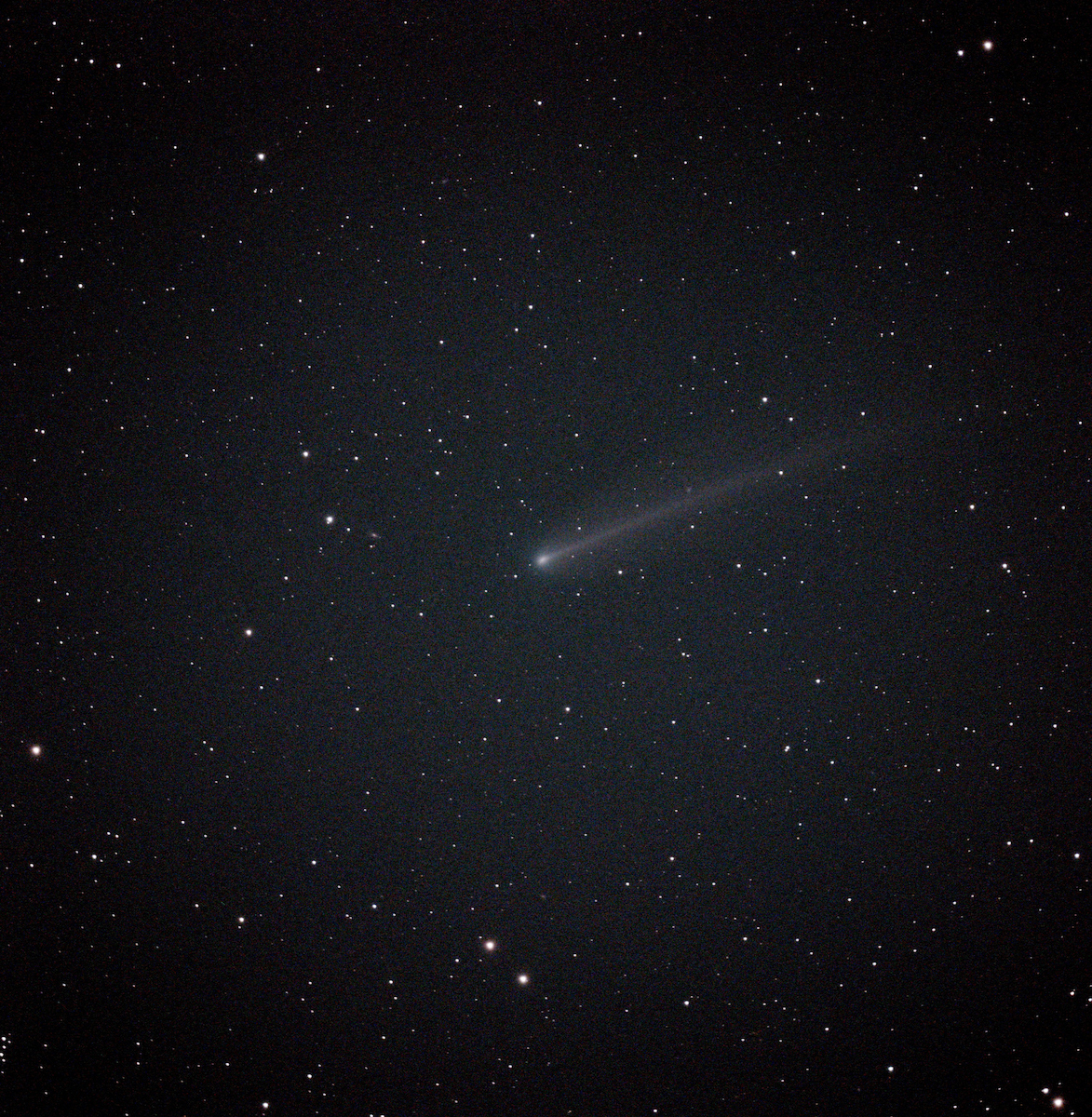
To further investigate the issue, I’ve started running multiple observations of the comet each night with different observation parameters. In addition to the target’s RA/Dec position, Singularity’s advanced mode for Manual Targets has several options: Target type (nebula, galaxy, cluster); Individual exposure time (1-30 sec); Gain (0-27 dB). For tonight’s observations I created Manual Targets with target type: nebula; varied the exposure time and varied the gain. The modified manual targets were added to the overnight plans for the different Vespera telescopes.
The results are shown in the unedited, “straight out of the telescope” (SOOT) JPG images below, and are available in my PhotoShelter gallery. Click on the i below the slideshow to see the caption with the Manual Target parameters.
The center gradient is not present on the Vespera 1 images but is visible with the other telescopes. Frame exposure time and gain didn’t seem to make much difference. There were a few observations where I adjusted the mosaic size, and you can see the background is darker in the center of the image where the comet is located. I’ll investigate mosaic size next time. However, it is not the best option when doing shorter observations when there is not enough time to complete multiple exposures over all sections of the mosaic — and the comet is moving relative to the background star field.
Leave a Reply