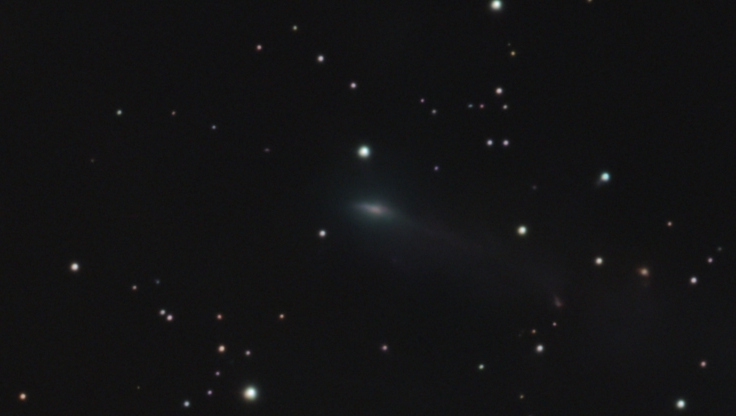
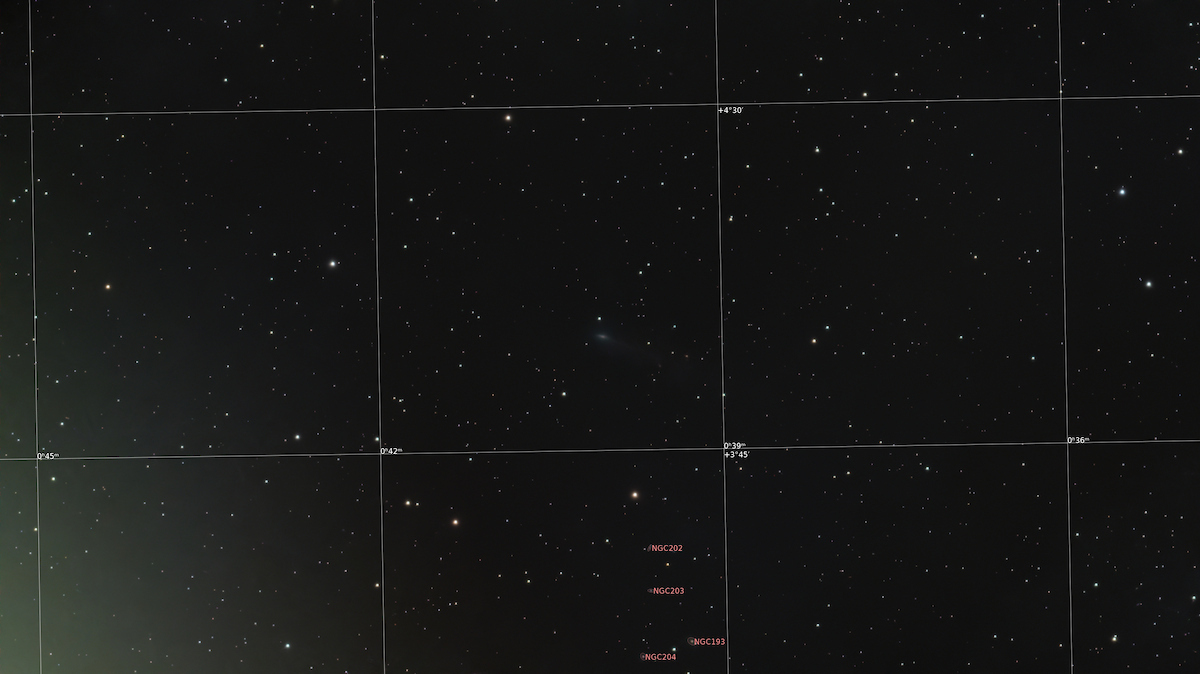
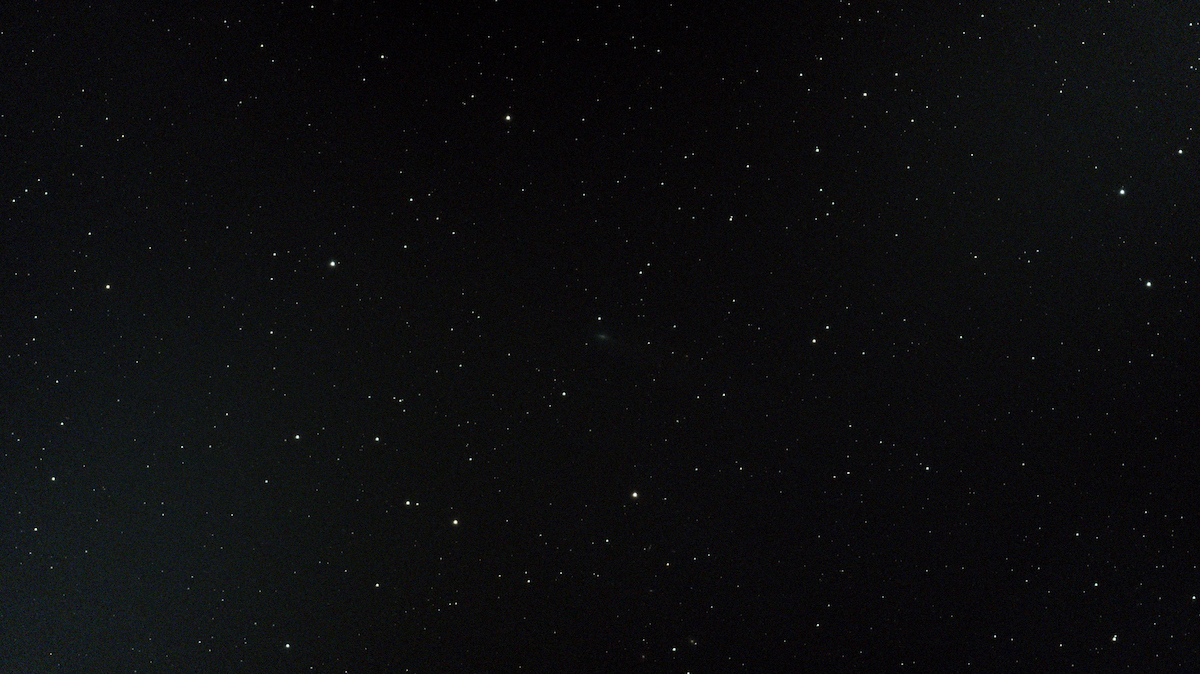
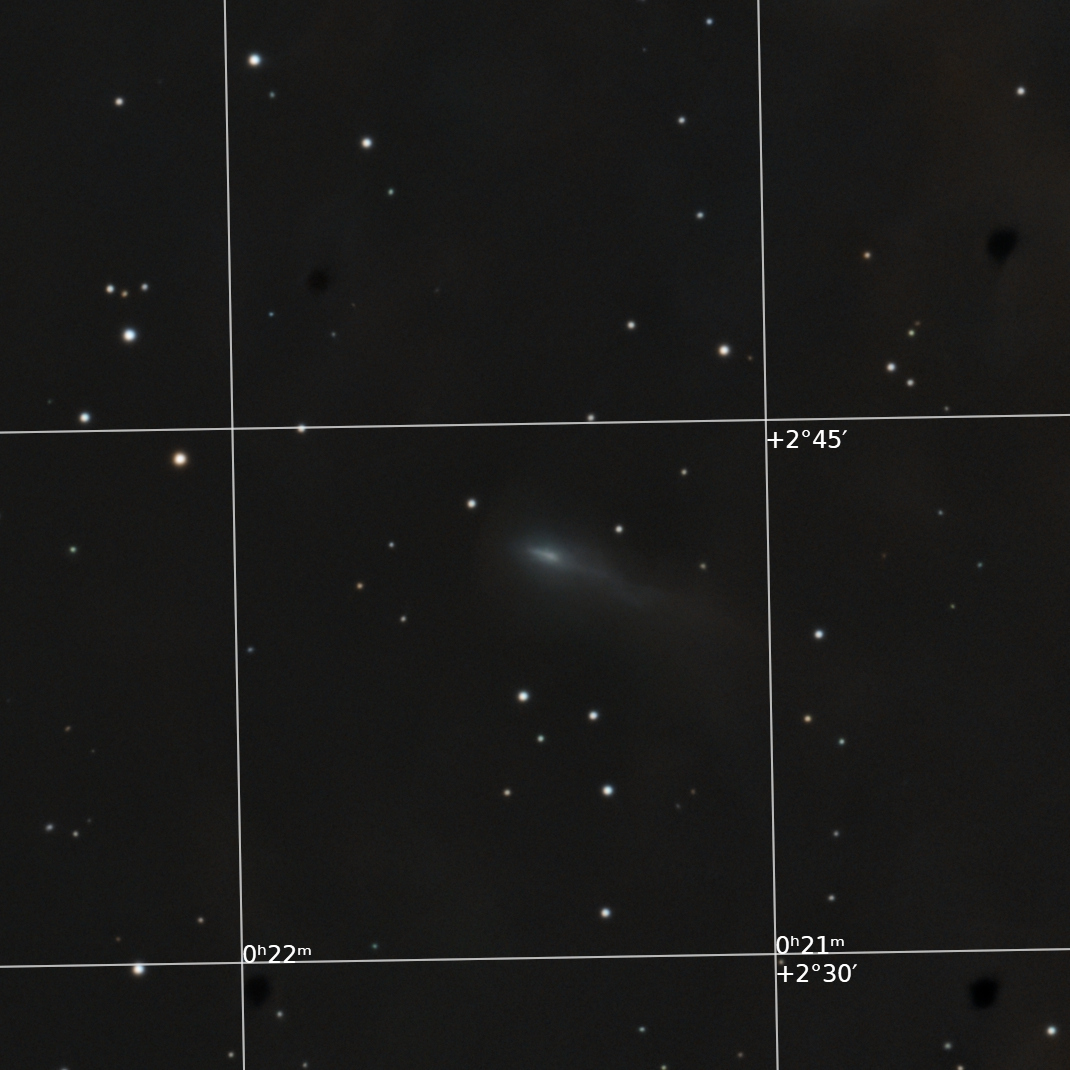
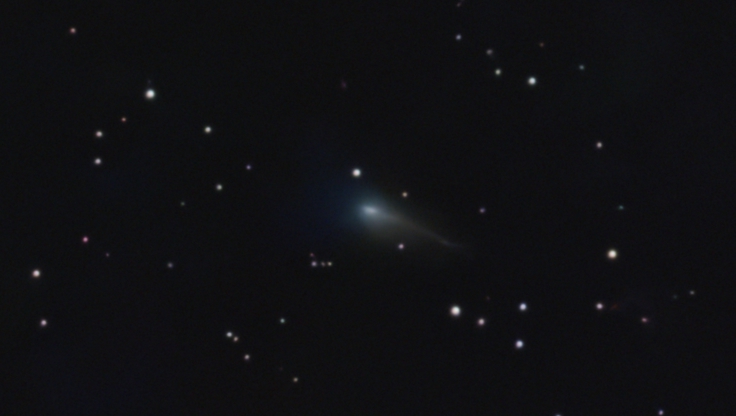
Comet 220P/McNaught is now post-perihelion (14-June-2026) and is still visible with my Vespera 3 telescope. I am now able to observe the comet without the trees being in the way. I obtained the coordinates for the comet from Stellarium (RA/DEC: 00h40m08s; 04°00’15”) and used to create a manual target for the Vespera 3 telescope. The observation was started at 03:29 and allowed continue until 04:00. The sky gets bright really early — it is only a few days before the summer solstice. I processed the composite 188 exposure (1880 sec) TIFF file with PixInsight. The straight out of the telescope (SOOF) JPG and 16-bit RAW/TIFF images are available on my PhotoShelter site.
Comet 220P/McNaught viewed from my backyard with a Vespera 3 Telescope. Composite of 188 (10 sec) exposures (1880 sec). Image processed with PixInsight (with grid overlay)Comet 220P/McNaught viewed from my backyard with a Vespera 3 Telescope. Composite of 188 (10 sec) exposures (1880 sec). Cropped image processed with PixInsight (with grid overlay)
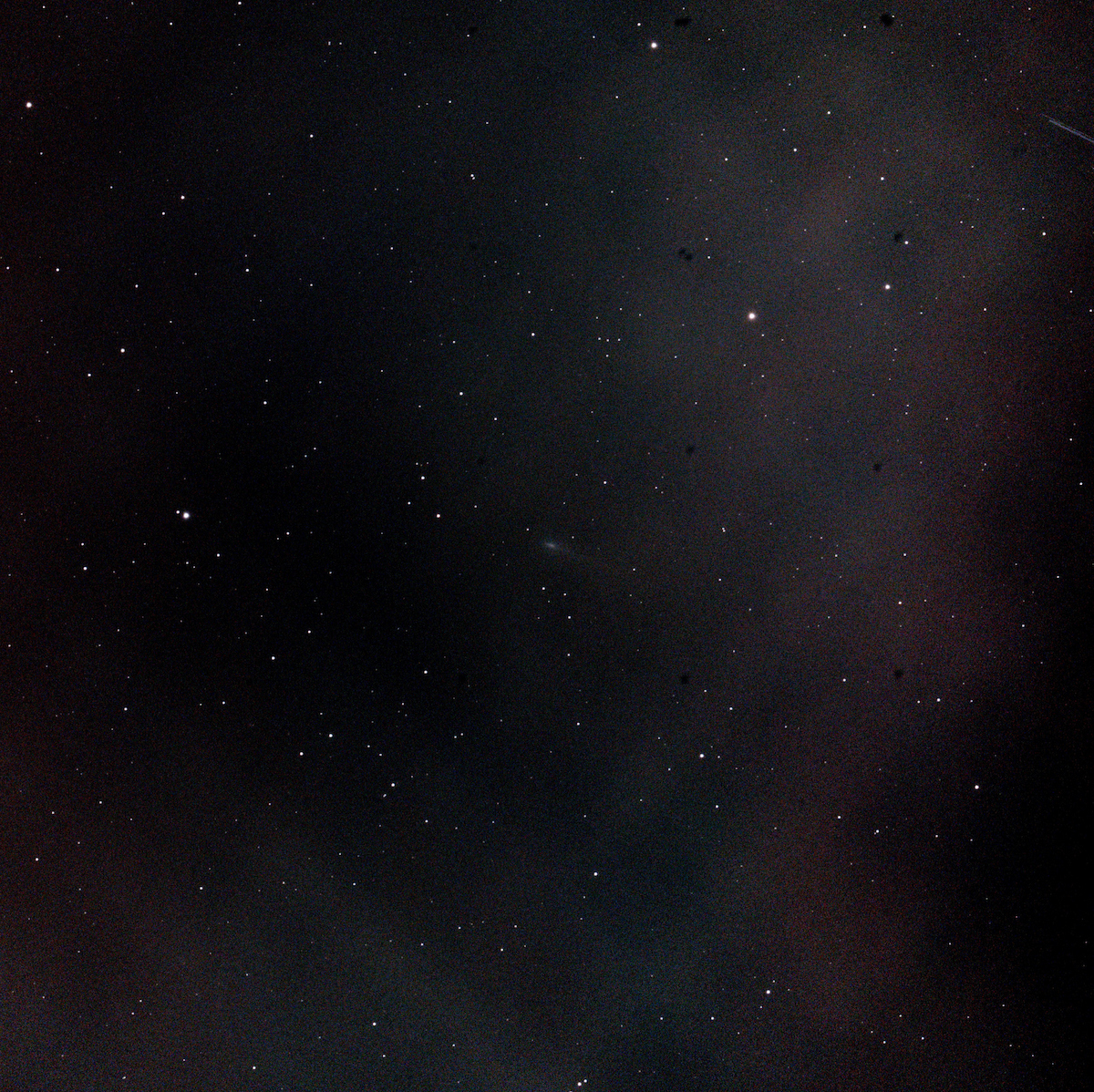
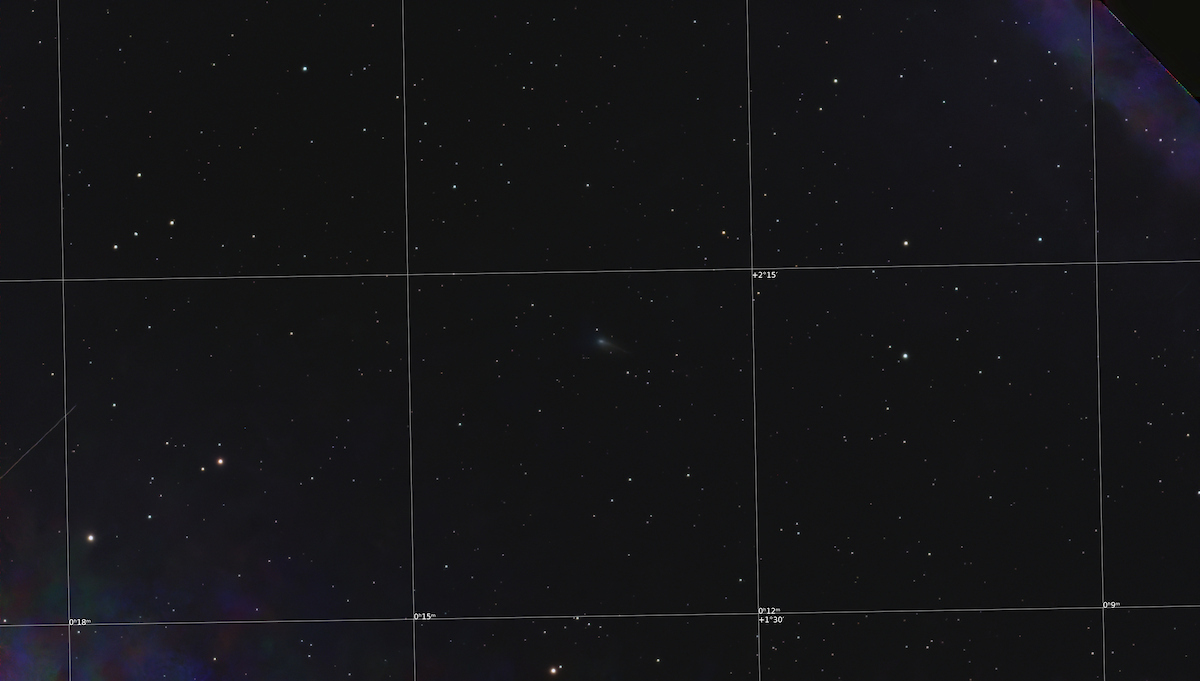
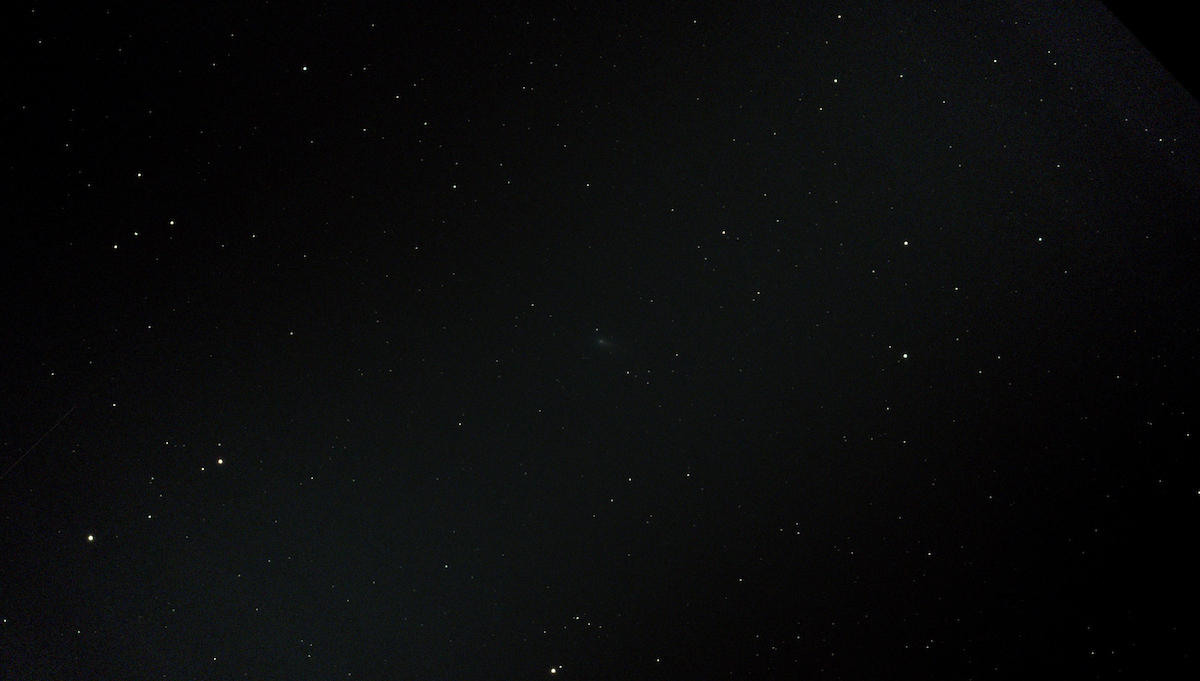
The night was clear, so I attempted to view Comet C220P/McNaught again (ra/dec: 00h21m31s, +02°41’46”). This time with the Vespera telescopes closer to the house. Trees were in the way, and I was not able to observe the comet with the Vespera 3 telescope. The Vespera Pro 2 telescope was able to lock on and track the comet, through an opening between the limbs and leaves of the trees next to the house. The moon was also bright and nearby in the sky. The composite view (131 images, 1310 sec) had a messy background. It needed a lot of processing (PixInsight, GrayScale, ABE, NoiseXterminator) but did show the comet. The unprocessed SOOT (straight out of the telescope) jpg and raw/tiff images for this observation are available to view on my PhotoShelter site.
Comet 220P/McNaught viewed from my backyard with a Vespera Pro 2 Telescope. Exposure time 1310 sec (131 composite images). Image processed with PixInsight with added grid lines and annotation.Comet 220P/McNaught viewed from my backyard with a Vespera Pro 2 Telescope. Exposure time 1310 sec (131 composite images). Image processed with PixInsight (cropped view).
I saw a note on the Space Weather site that comet C220P/McNaught just increased in brightness. I looked up the coordinates (RA/Dec (J2000.0): 0h13m22s/+2°06’01”) using Stellarium. It looked like it may be visible from my location early in the morning. At this time of the year that is really early. Astronomical dawn starts at 02:36. I moved the Vespera 3 telescope to a location in the far backyard to have visibility to the east above the tree line where I thought the comet might be visible. At 03:00 after initializing the Vespera 3 telescope and programing the coordinates as a manual target I had the telescope look for the comet. I realized that there was still a tree in the way. So, I moved the telescope, reinitialized it, and had it look for the comet again. At 03:30 the Vespera 3 telescope found the comet, and I was able to get a 65 image composite (650 sec). Even though the sky was getting brighter, I followed up with three more observations at 03:46, 04:00, and 04:18. By the time of the last observation clouds started appearing and the sky was getting too bright. Sunrise was at 05:26.
Comet 220P/McNaught viewed from my backyard with a Vespera 3 Telescope. Composite of 65 (10 sec) exposures (10 min 50 sec). Processed with PixInsight (with grid overlay).
The comet C220P/McNaught was not very bright. The head of the comet has the green color from ionization of diatomic carbon (C2). There was a lot of early morning light pollution that needed to be removed with the PixInsight Automatic Background Extractor (ABE) tool. I added the grid to the image to get an estimate of the length of the tail. The comet is still approaching the sun (perihelion on 14-June) so I am not sure if I will have another opportunity to view it again. The unprocessed SOOT (straight out of the telescope) jpg and raw/tiff images for this and the other observations are available to view on my PhotoShelter site. Time-lapse videos recording the overnight viewing conditions (180° night sky and 360° little planet) for the night are available on my Time-Lapse site (05-June-2026).
I am a scientist by training (Eckerd College, BSc; Caltech, Ph.D.). I worked for 27 years as a Chemist in the Pharmaceutical Industry developing processes to manufacture medicines for human and animal health. I now spend my time as a photographer and world traveler. My interests include the natural world, wildlife, landscapes, sky, and seascapes, travel, and astrophotography. I look for unique ways of viewing the world and presenting my images. I have traveled to over 55 countries in six continents, often on Semester at Sea voyages. While at home in New Jersey, I spend time observing and photographing the plants and animals while expanding a wildflower garden/meadow in the backyard. When the sky is clear, I have telescopes viewing the night sky.
Leave a Reply