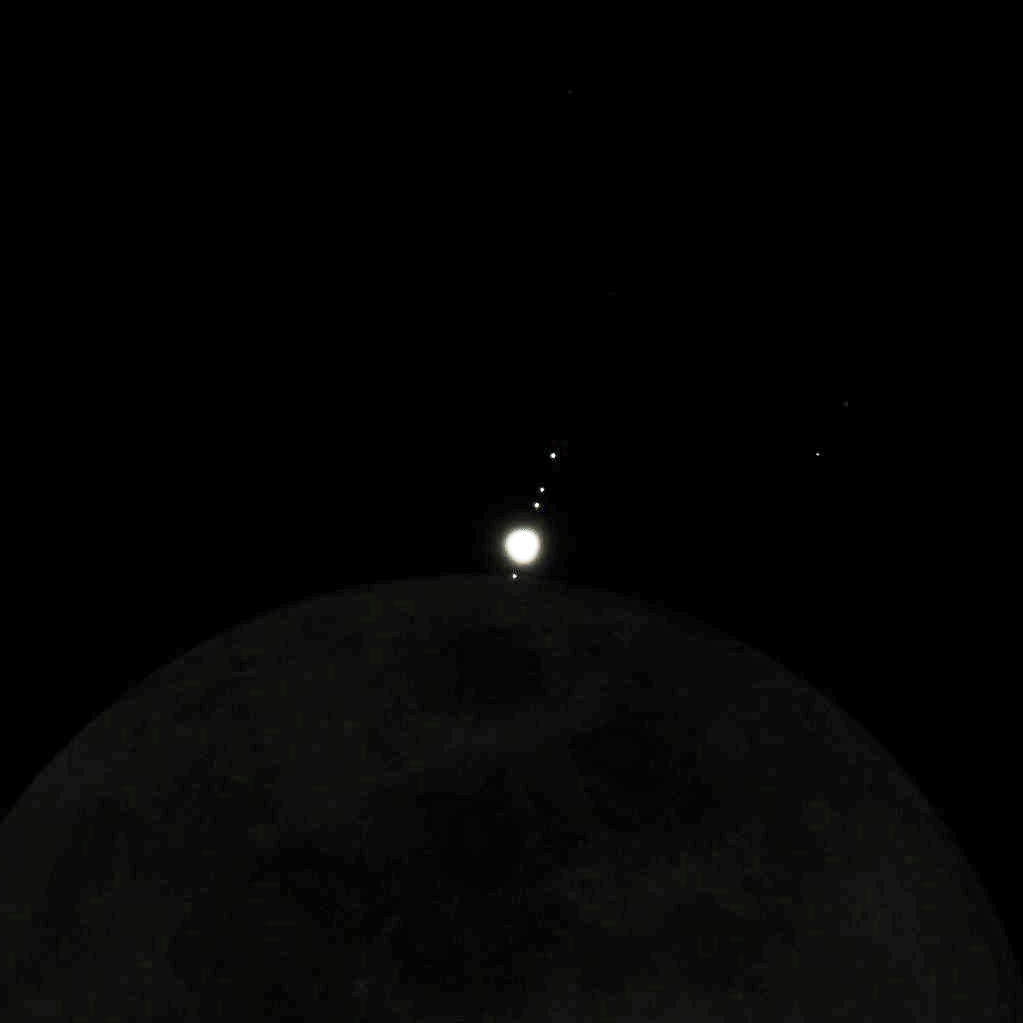
Weather permitting, a rare lunar occultation of Jupiter was going to be visible at my location early the morning of 06-October. I previously recorded a lunar occultation of Mars (13-January-2025) with my Vespera telescopes. For that occultation the moon was full. This time the moon was a waning crescent. Jupiter would disappear behind the bright side of the moon’s crescent and reappear an hour later on the dark (illuminated by earthshine) side of the moon.
There is a significant difference between the luminosity of the moon and Jupiter. This requires choices and compromises when setting up the observation parameters for recording the occultation. For the previous Mars occultation, I set up one telescope with the Vespera parameters optimized for lunar observations. The moon looked OK, but Mars was just a tiny dot. I set up a second telescope with the Vespera parameters optimized for the other planets. Mars appeared as a small orange disk, but the moon was over exposed. I was not able to see the two moons of Mars on that occasion.
For this occultation of Jupiter, I also wanted to see if I could observe and record time that the four brightest moons of Jupiter (Callisto, Ganymede, Europa, and Io) disappear and reappear. I previously figured out a way to configure a Vespera telescope to observe Jupiter’s moons (18-February-2025) as a modified manual target.
The evening sky was clear. I set up overnight plans for the Vespera telescopes. Some programed for lunar observations, and some programed to view Jupiter and the moons as modified manual targets. The telescopes needed to be in expert mode to set the manual target exposure time and gain. Object type: stars; Pointing type: indirect: Exposure time: 1 sec; and Gain: 0 dB. The right ascension (09h 31m 04s) and declination (+15°, 20′, 31″) for Jupiter at the time of the occultation for my location came from the Stellarium windows application.
I started the overnight observation plans and went to bed. The occultation wouldn’t begin until after 04:15. Unfortunately, when I went out to check the telescopes, I realized that the moon was still below the tree line. Since I set the telescope observing Jupiter to use the “indirect” pointing mode it did initialize and still was able to point at Jupiter and be in focus. Most of the image was obscured by the tree leaves, and as expected the bright part of the moon’s crescent was overblown.
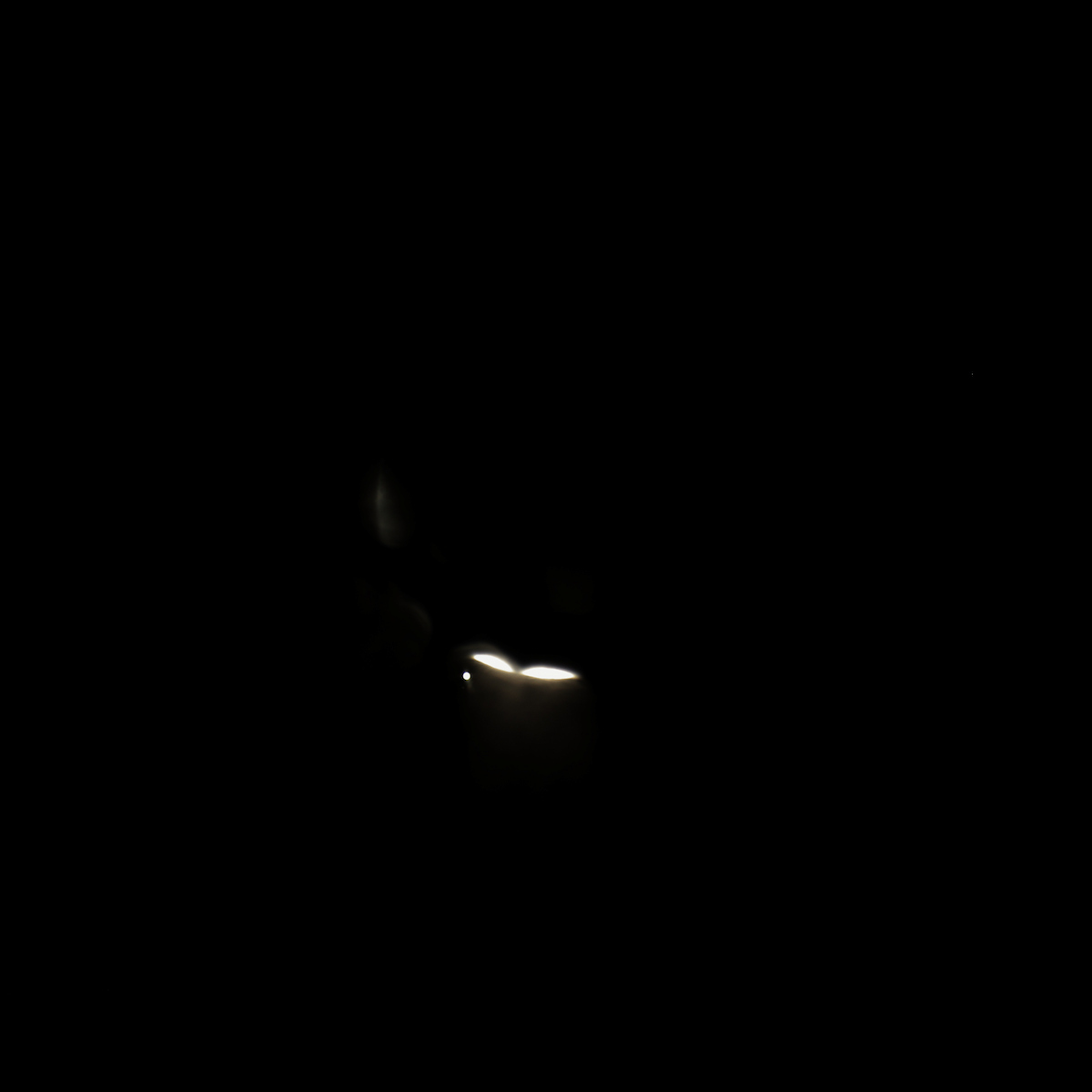
Even though observation of the start of the occultation failed, I still had a chance to view the end of the occultation. Jupiter and its moons wouldn’t reappear from behind the moon for nearly an hour. Rather than gamble that the moon would rise enough above the tree line, I moved the tripods and telescopes. The Vespera telescopes are light enough (~ 5 kg/11 lbs) to do this. After leveling the tripods, I reinitialized the telescopes and restarted the observation plan.
From this location the telescopes successfully recorded Jupiter and its four largest moons reappearing. Europa (05:21:11), Callisto (05:23:19), Io (05:24:13), Jupiter (start 05:26:07, end 05:27:13), and finally Ganymede (05:28:39). The times are local (- 4 hours from UTC) as recorded by the telescope.
I created two time-lapse videos of the event. The first time-lapse video from images recorded by a Vespera 3 telescope. The bright part of the moon’s crescent is slightly over exposed, and the dark part of the moon is not visible. Jupiter is definitely a disk, but with the Vespera telescopes too small to see any detail. In this video, Jupiter’s moons are not visible.
The second time-lapse video is from images recorded by a Vespera Pro 2 telescope. The images were processed with Capture One. I cropped out the bright part of the moon’s crescent. The dark side of the moon is barely visible. Jupiter is over exposed. For the manual target settings (type: stars) the shortest exposure time is 1 second, and the lowest gain is 0 dB. Also, the telescope only saves 8-bit jpg images in this mode. I would have been able to pull out more detail while processing the images if there was an option to collect and save 16-bit TIFF files during the observation.
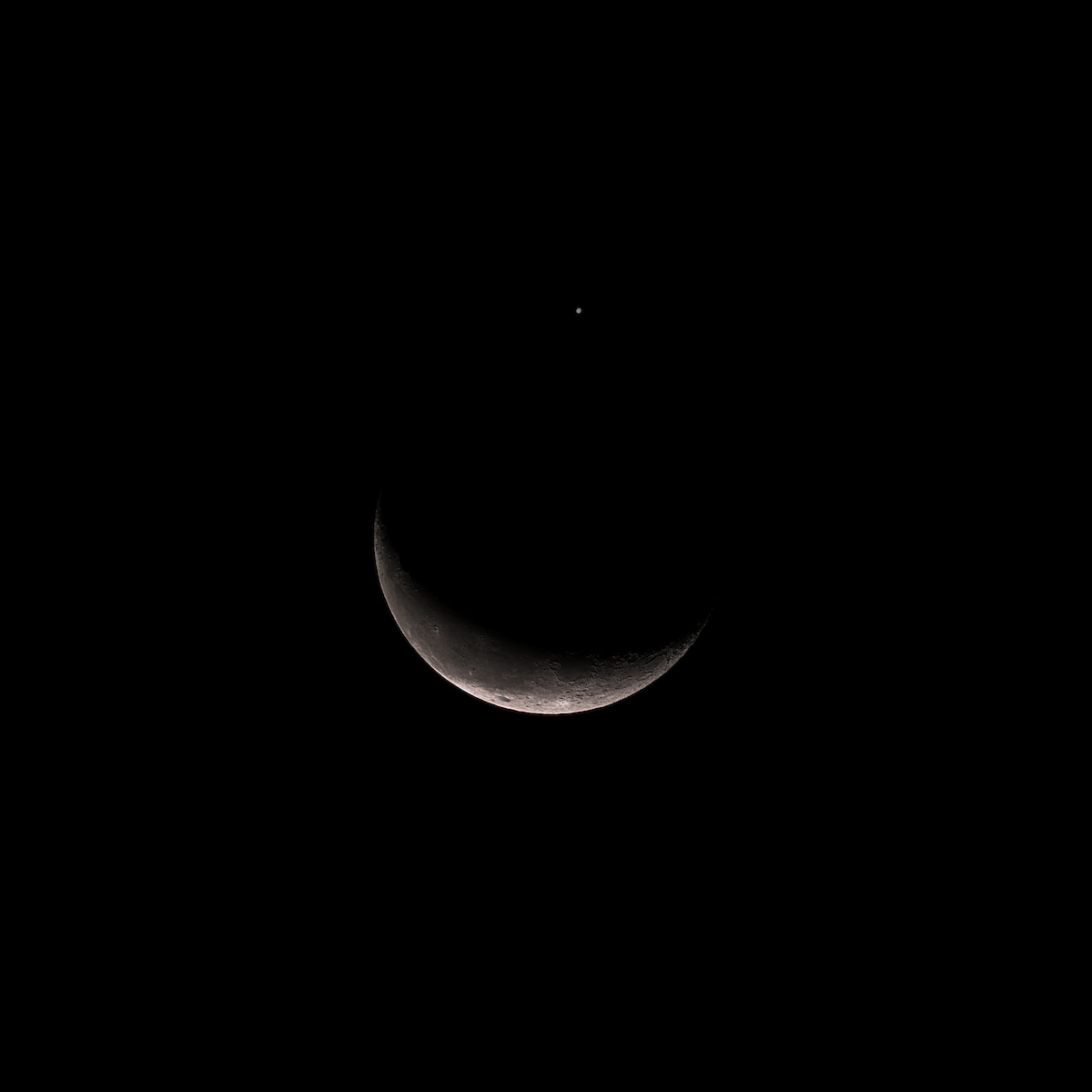
The next image (post occultation event) was also taken by the Vespera Pro 2 telescope but in lunar observation mode. This mode uses a much faster exposure time (0.0038 sec). Details on the sunlit portion of the moon’s crescent are visible and properly exposed with the remainder of the moon being black. Jupiter is the small white disk above the moon. Jupiter’s moons are not visible in this image.
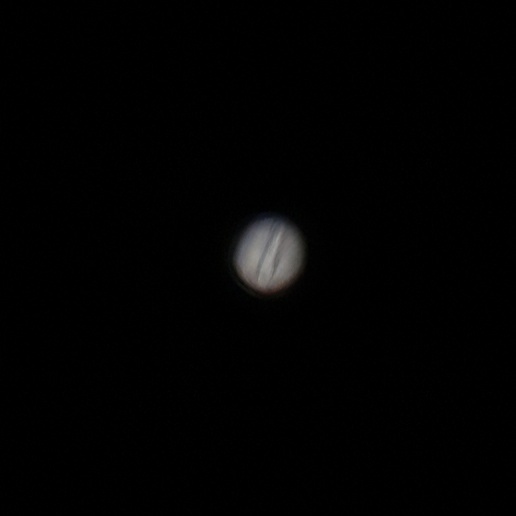
As an experiment, I used Topaz Photo to smooth and scale-up the image of Jupiter. I started with a 128 x 128 pixel crop of Jupiter from the above image and let Topaz scale it 4x. Are the bands real, or AI artifacts?
Leave a Reply